
Casa Museo Grazia Deledda
The house where she was born in the Santu Predu district preserves memories of the writer and her family.
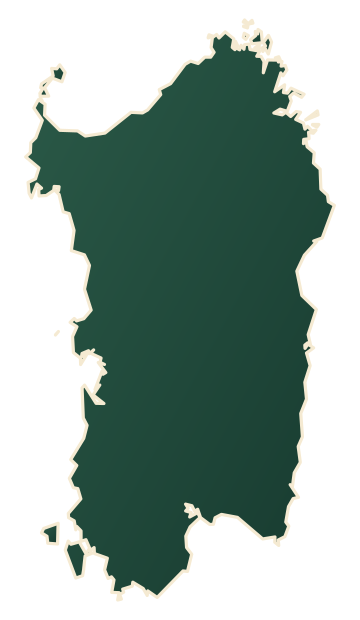
Nuoro, Galtellì, Rome and Stockholm: a map of real and imagined places in Grazia Deledda's life and work.
Grazia Deledda does not merely describe places: she makes landscapes, homes and paths part of the stories. The journey begins in Nuoro, the town of her childhood, and continues through places that nourished her imagination.
In Nuoro's historic centre stands the house where the writer was born, now the Grazia Deledda House Museum: an essential place for understanding her early environment.
Galtellì inspired the fictional Galte of Canne al vento, where the characters' lives are closely tied to the landscape.
Three stops to explore Deledda's life. Always check opening hours and access details with each site's management.
The house where she was born in the Santu Predu district preserves memories of the writer and her family.
The streets of Nuoro help visitors discover the town described in her autobiographical writing.
Here rest the writer's remains, in a place connected to the city's public and cultural memory.
Following her marriage in 1900, Deledda moved to Rome, where she continued writing extensively, often drawing inspiration from Sardinia.
This town on the Adriatic coast became part of the author's private geography and the memories of her family life.
In Sweden in 1927, she received the 1926 Nobel Prize in Literature.
Historical information and ideas for visiting: always verify opening times and admission rules on the venues' official websites.
Her birthplace at 42 Via Grazia Deledda houses ISRE's Museo Deleddiano, opened in 1983. Manuscripts, photographs and family belongings document her life in Nuoro and Rome; the Nobel diploma and medal are also preserved there. It is an ideal starting point for reading Cosima through the places that shaped her childhood.
Official museum information ↗At the foot of Mount Ortobene, the church now houses the writer's remains, transferred from Rome in 1959. The place is also connected with her final novel, La chiesa della solitudine (1936). Here literary memory and the memory of the town meet in a particularly moving way.
Cultural heritage record ↗On the itinerary proposed by SardegnaTurismo, Orune recalls Colombi e sparvieri and Galtellì the village of Galte in Canne al vento. Reading enriches the experience of the historic centre, churches and countryside. Not every building corresponds to an invented location, but the dialogue between landscape and fiction is part of the visit.
Regional cultural itinerary ↗Rediscover her characters, stories and themes through our selection of works.